Friday, May 31, 2019

OIC platform must be used to delink terrorism with Islam: PM Khan

OIC platform must be used to delink terrorism with Islam: PM Khan

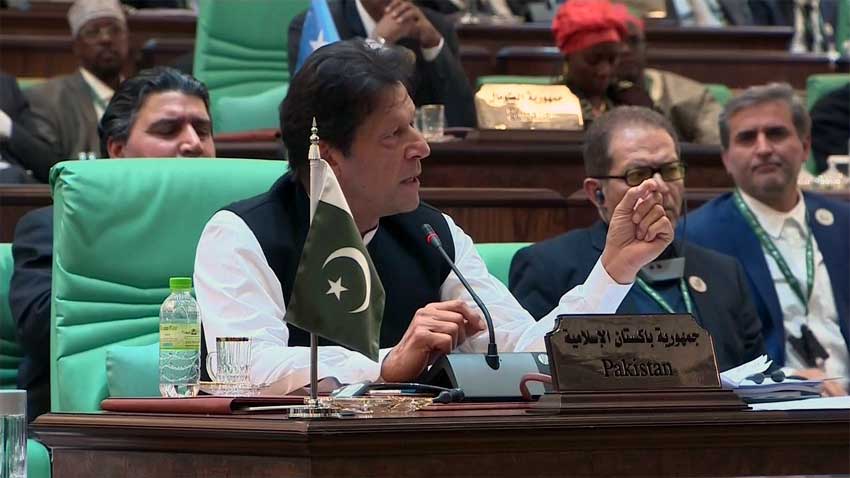
MAKKAH: Prime Minister Imran Khan on Saturday said the Muslim world must use the platform of Organization of Islamic Cooperation (OIC) to disassociate terrorism from Islam, Radio Pakistan reported. 

Addressing the 14th OIC Summit in Makkah early this morning, the prime minister urged OIC to play an effective role in safeguarding the rights of Muslims and their religious sentiments.

Terming the phenomena of blasphemy and Islamophobia in the west as a failure of the OIC, he pointed out that the Organization’s “inability has also led to delegitimizing the Muslim political freedom struggles, which were termed as ‘Islamic radicalism’.”

Kashmir had been carrying out their political struggle for freedom but after 9/11, it was dubbed as ‘Islamic radicalism and terrorism’: PM

PM Khan said the people of Indian occupied Kashmir had been carrying out their political struggle for freedom but after 9/11, it was also dubbed as ‘Islamic radicalism and terrorism’.

Similarly, he said Israel started oppressing the Palestinians calling their freedom movement as ‘Islamic terrorism’.

The premier reiterated that there is no solution to the Palestine issue except the two-state solution with East Jerusalem as the capital of the Palestinian state.

Moreover, he said the people of Indian occupied Kashmir have not been given their right to self-determination as had been guaranteed by the United Nations Security Council’s resolutions.

Prime Minister Khan is currently in Saudi Arabia to represent Pakistan at the 14th Summit of OIC being held in Makkah.

The conference titled ‘Makkah Summit: Together for the Future’ is being hosted by Saudi King Salman bin Abdulaziz Al Saud.

The conference aims to unite Muslim countries on one platform to better tackle the difficulties and challenges they are facing.


The post OIC platform must be used to delink terrorism with Islam: PM Khan appeared first on ARYNEWS.


from ARYNEWS http://bit.ly/2YZ7lmm
http://bit.ly/2G05abq

OIC platform must be used to delink terrorism with Islam: PM Khan

OIC platform must be used to delink terrorism with Islam: PM Khan

MAKKAH: Prime Minister Imran Khan on Saturday said the Muslim world must use the platform of Organization of Islamic Cooperation (OIC) to disassociate terrorism from Islam, Radio Pakistan reported. 

Addressing the 14th OIC Summit in Makkah early this morning, the prime minister urged OIC to play an effective role in safeguarding the rights of Muslims and their religious sentiments.

Terming the phenomena of blasphemy and Islamophobia in the west as a failure of the OIC, he pointed out that the Organization’s “inability has also led to delegitimizing the Muslim political freedom struggles, which were termed as ‘Islamic radicalism’.”

Kashmir had been carrying out their political struggle for freedom but after 9/11, it was dubbed as ‘Islamic radicalism and terrorism’: PM

PM Khan said the people of Indian occupied Kashmir had been carrying out their political struggle for freedom but after 9/11, it was also dubbed as ‘Islamic radicalism and terrorism’.

Similarly, he said Israel started oppressing the Palestinians calling their freedom movement as ‘Islamic terrorism’.

The premier reiterated that there is no solution to the Palestine issue except the two-state solution with East Jerusalem as the capital of the Palestinian state.

Moreover, he said the people of Indian occupied Kashmir have not been given their right to self-determination as had been guaranteed by the United Nations Security Council’s resolutions.

Prime Minister Khan is currently in Saudi Arabia to represent Pakistan at the 14th Summit of OIC being held in Makkah.

The conference titled ‘Makkah Summit: Together for the Future’ is being hosted by Saudi King Salman bin Abdulaziz Al Saud.

The conference aims to unite Muslim countries on one platform to better tackle the difficulties and challenges they are facing.


The post OIC platform must be used to delink terrorism with Islam: PM Khan appeared first on ARYNEWS.


http://bit.ly/2G05abq
from ARYNEWS http://bit.ly/2YZ7lmm
via IFTTT

OIC platform must be used to delink terrorism with Islam: PM Khan

OIC platform must be used to delink terrorism with Islam: PM Khan

MAKKAH: Prime Minister Imran Khan on Saturday said the Muslim world must use the platform of Organization of Islamic Cooperation (OIC) to disassociate terrorism from Islam, Radio Pakistan reported. 

Addressing the 14th OIC Summit in Makkah early this morning, the prime minister urged OIC to play an effective role in safeguarding the rights of Muslims and their religious sentiments.

Terming the phenomena of blasphemy and Islamophobia in the west as a failure of the OIC, he pointed out that the Organization’s “inability has also led to delegitimizing the Muslim political freedom struggles, which were termed as ‘Islamic radicalism’.”

Kashmir had been carrying out their political struggle for freedom but after 9/11, it was dubbed as ‘Islamic radicalism and terrorism’: PM

PM Khan said the people of Indian occupied Kashmir had been carrying out their political struggle for freedom but after 9/11, it was also dubbed as ‘Islamic radicalism and terrorism’.

Similarly, he said Israel started oppressing the Palestinians calling their freedom movement as ‘Islamic terrorism’.

The premier reiterated that there is no solution to the Palestine issue except the two-state solution with East Jerusalem as the capital of the Palestinian state.

Moreover, he said the people of Indian occupied Kashmir have not been given their right to self-determination as had been guaranteed by the United Nations Security Council’s resolutions.

Prime Minister Khan is currently in Saudi Arabia to represent Pakistan at the 14th Summit of OIC being held in Makkah.

The conference titled ‘Makkah Summit: Together for the Future’ is being hosted by Saudi King Salman bin Abdulaziz Al Saud.

The conference aims to unite Muslim countries on one platform to better tackle the difficulties and challenges they are facing.


The post OIC platform must be used to delink terrorism with Islam: PM Khan appeared first on ARYNEWS.


from ARYNEWS http://bit.ly/2YZ7lmm
via IFTTT

OIC platform must be used to delink terrorism with Islam: PM Khan

OIC platform must be used to delink terrorism with Islam: PM Khan

MAKKAH: Prime Minister Imran Khan on Saturday said the Muslim world must use the platform of Organization of Islamic Cooperation (OIC) to disassociate terrorism from Islam, Radio Pakistan reported. 

Addressing the 14th OIC Summit in Makkah early this morning, the prime minister urged OIC to play an effective role in safeguarding the rights of Muslims and their religious sentiments.

Terming the phenomena of blasphemy and Islamophobia in the west as a failure of the OIC, he pointed out that the Organization’s “inability has also led to delegitimizing the Muslim political freedom struggles, which were termed as ‘Islamic radicalism’.”

Kashmir had been carrying out their political struggle for freedom but after 9/11, it was dubbed as ‘Islamic radicalism and terrorism’: PM

PM Khan said the people of Indian occupied Kashmir had been carrying out their political struggle for freedom but after 9/11, it was also dubbed as ‘Islamic radicalism and terrorism’.

Similarly, he said Israel started oppressing the Palestinians calling their freedom movement as ‘Islamic terrorism’.

The premier reiterated that there is no solution to the Palestine issue except the two-state solution with East Jerusalem as the capital of the Palestinian state.

Moreover, he said the people of Indian occupied Kashmir have not been given their right to self-determination as had been guaranteed by the United Nations Security Council’s resolutions.

Prime Minister Khan is currently in Saudi Arabia to represent Pakistan at the 14th Summit of OIC being held in Makkah.

The conference titled ‘Makkah Summit: Together for the Future’ is being hosted by Saudi King Salman bin Abdulaziz Al Saud.

The conference aims to unite Muslim countries on one platform to better tackle the difficulties and challenges they are facing.


The post OIC platform must be used to delink terrorism with Islam: PM Khan appeared first on ARYNEWS.


from ARYNEWS http://bit.ly/2YZ7lmm

OIC platform must be used to delink terrorism with Islam: PM Khan

OIC platform must be used to delink terrorism with Islam: PM Khan

MAKKAH: Prime Minister Imran Khan on Saturday said the Muslim world must use the platform of Organization of Islamic Cooperation (OIC) to disassociate terrorism from Islam, Radio Pakistan reported. 

Addressing the 14th OIC Summit in Makkah early this morning, the prime minister urged OIC to play an effective role in safeguarding the rights of Muslims and their religious sentiments.

Terming the phenomena of blasphemy and Islamophobia in the west as a failure of the OIC, he pointed out that the Organization’s “inability has also led to delegitimizing the Muslim political freedom struggles, which were termed as ‘Islamic radicalism’.”

Kashmir had been carrying out their political struggle for freedom but after 9/11, it was dubbed as ‘Islamic radicalism and terrorism’: PM

PM Khan said the people of Indian occupied Kashmir had been carrying out their political struggle for freedom but after 9/11, it was also dubbed as ‘Islamic radicalism and terrorism’.

Similarly, he said Israel started oppressing the Palestinians calling their freedom movement as ‘Islamic terrorism’.

The premier reiterated that there is no solution to the Palestine issue except the two-state solution with East Jerusalem as the capital of the Palestinian state.

Moreover, he said the people of Indian occupied Kashmir have not been given their right to self-determination as had been guaranteed by the United Nations Security Council’s resolutions.

Prime Minister Khan is currently in Saudi Arabia to represent Pakistan at the 14th Summit of OIC being held in Makkah.

The conference titled ‘Makkah Summit: Together for the Future’ is being hosted by Saudi King Salman bin Abdulaziz Al Saud.

The conference aims to unite Muslim countries on one platform to better tackle the difficulties and challenges they are facing.


The post OIC platform must be used to delink terrorism with Islam: PM Khan appeared first on ARYNEWS.


from ARYNEWS http://bit.ly/2YZ7lmm

http://bit.ly/2G05abq

PM Khan, Saudi crown prince discuss bilateral ties

PM Khan, Saudi crown prince discuss bilateral ties

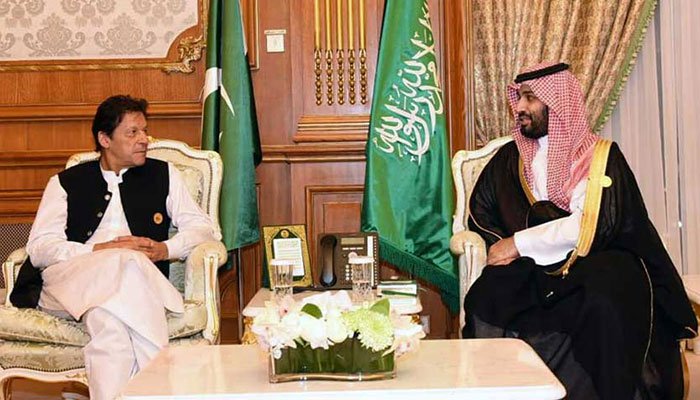
MAKKAH: Prime Minister Imran Khan met Saudi Crown Prince Mohammad bin Salman on Saturday on the sidelines of the 14th Summit of the Organisation of Islamic Cooperation (OIC), Radio Pakistan reported. 

According to details, the two leaders discussed matters of mutual interest during their meeting in Makkah and took stock of the current state of bilateral, political, economic and trade relations.

They also agreed to expedite decisions taken during the visit of the crown prince to Pakistan in February this year, in particular, early implementation of decisions taken during the first meeting of the Supreme Coordination Council.

The prime minister also thanked the Saudi government for extending oil facility to Pakistan on deferred payments.

Both sides agreed to regularly exchange views on all issues of mutual interest.

Prime Minister Khan is currently in Saudi Arabia to represent Pakistan at the 14th Summit of OIC being held in Makkah.

The conference titled ‘Makkah Summit: Together for the Future’ is being hosted by Saudi King Salman bin Abdulaziz Al Saud.

The conference aims to unite Muslim countries on one platform to better tackle the difficulties and challenges they are facing.


The post PM Khan, Saudi crown prince discuss bilateral ties appeared first on ARYNEWS.


http://bit.ly/2G05abq
from ARYNEWS http://bit.ly/30VOp9S
via IFTTT

PM Khan, Saudi crown prince discuss bilateral ties

PM Khan, Saudi crown prince discuss bilateral ties

MAKKAH: Prime Minister Imran Khan met Saudi Crown Prince Mohammad bin Salman on Saturday on the sidelines of the 14th Summit of the Organisation of Islamic Cooperation (OIC), Radio Pakistan reported. 

According to details, the two leaders discussed matters of mutual interest during their meeting in Makkah and took stock of the current state of bilateral, political, economic and trade relations.

They also agreed to expedite decisions taken during the visit of the crown prince to Pakistan in February this year, in particular, early implementation of decisions taken during the first meeting of the Supreme Coordination Council.

The prime minister also thanked the Saudi government for extending oil facility to Pakistan on deferred payments.

Both sides agreed to regularly exchange views on all issues of mutual interest.

Prime Minister Khan is currently in Saudi Arabia to represent Pakistan at the 14th Summit of OIC being held in Makkah.

The conference titled ‘Makkah Summit: Together for the Future’ is being hosted by Saudi King Salman bin Abdulaziz Al Saud.

The conference aims to unite Muslim countries on one platform to better tackle the difficulties and challenges they are facing.


The post PM Khan, Saudi crown prince discuss bilateral ties appeared first on ARYNEWS.


from ARYNEWS http://bit.ly/30VOp9S

PM Khan, Saudi crown prince discuss bilateral ties

PM Khan, Saudi crown prince discuss bilateral ties

MAKKAH: Prime Minister Imran Khan met Saudi Crown Prince Mohammad bin Salman on Saturday on the sidelines of the 14th Summit of the Organisation of Islamic Cooperation (OIC), Radio Pakistan reported. 

According to details, the two leaders discussed matters of mutual interest during their meeting in Makkah and took stock of the current state of bilateral, political, economic and trade relations.

They also agreed to expedite decisions taken during the visit of the crown prince to Pakistan in February this year, in particular, early implementation of decisions taken during the first meeting of the Supreme Coordination Council.

The prime minister also thanked the Saudi government for extending oil facility to Pakistan on deferred payments.

Both sides agreed to regularly exchange views on all issues of mutual interest.

Prime Minister Khan is currently in Saudi Arabia to represent Pakistan at the 14th Summit of OIC being held in Makkah.

The conference titled ‘Makkah Summit: Together for the Future’ is being hosted by Saudi King Salman bin Abdulaziz Al Saud.

The conference aims to unite Muslim countries on one platform to better tackle the difficulties and challenges they are facing.


The post PM Khan, Saudi crown prince discuss bilateral ties appeared first on ARYNEWS.


from ARYNEWS http://bit.ly/30VOp9S
http://bit.ly/2G05abq

PM Khan, Saudi crown prince discuss bilateral ties

PM Khan, Saudi crown prince discuss bilateral ties

MAKKAH: Prime Minister Imran Khan met Saudi Crown Prince Mohammad bin Salman on Saturday on the sidelines of the 14th Summit of the Organisation of Islamic Cooperation (OIC), Radio Pakistan reported. 

According to details, the two leaders discussed matters of mutual interest during their meeting in Makkah and took stock of the current state of bilateral, political, economic and trade relations.

They also agreed to expedite decisions taken during the visit of the crown prince to Pakistan in February this year, in particular, early implementation of decisions taken during the first meeting of the Supreme Coordination Council.

The prime minister also thanked the Saudi government for extending oil facility to Pakistan on deferred payments.

Both sides agreed to regularly exchange views on all issues of mutual interest.

Prime Minister Khan is currently in Saudi Arabia to represent Pakistan at the 14th Summit of OIC being held in Makkah.

The conference titled ‘Makkah Summit: Together for the Future’ is being hosted by Saudi King Salman bin Abdulaziz Al Saud.

The conference aims to unite Muslim countries on one platform to better tackle the difficulties and challenges they are facing.


The post PM Khan, Saudi crown prince discuss bilateral ties appeared first on ARYNEWS.


from ARYNEWS http://bit.ly/30VOp9S

http://bit.ly/2G05abq

PM Khan, Saudi crown prince discuss bilateral ties

PM Khan, Saudi crown prince discuss bilateral ties

MAKKAH: Prime Minister Imran Khan met Saudi Crown Prince Mohammad bin Salman on Saturday on the sidelines of the 14th Summit of the Organisation of Islamic Cooperation (OIC), Radio Pakistan reported. 

According to details, the two leaders discussed matters of mutual interest during their meeting in Makkah and took stock of the current state of bilateral, political, economic and trade relations.

They also agreed to expedite decisions taken during the visit of the crown prince to Pakistan in February this year, in particular, early implementation of decisions taken during the first meeting of the Supreme Coordination Council.

The prime minister also thanked the Saudi government for extending oil facility to Pakistan on deferred payments.

Both sides agreed to regularly exchange views on all issues of mutual interest.

Prime Minister Khan is currently in Saudi Arabia to represent Pakistan at the 14th Summit of OIC being held in Makkah.

The conference titled ‘Makkah Summit: Together for the Future’ is being hosted by Saudi King Salman bin Abdulaziz Al Saud.

The conference aims to unite Muslim countries on one platform to better tackle the difficulties and challenges they are facing.


The post PM Khan, Saudi crown prince discuss bilateral ties appeared first on ARYNEWS.


from ARYNEWS http://bit.ly/30VOp9S
via IFTTT

As Afghanistan's war rolls on, its mental health toll grows greater

As Afghanistan's war rolls on, its mental health toll grows greater

Demand for professional mental health services vastly exceeds supply

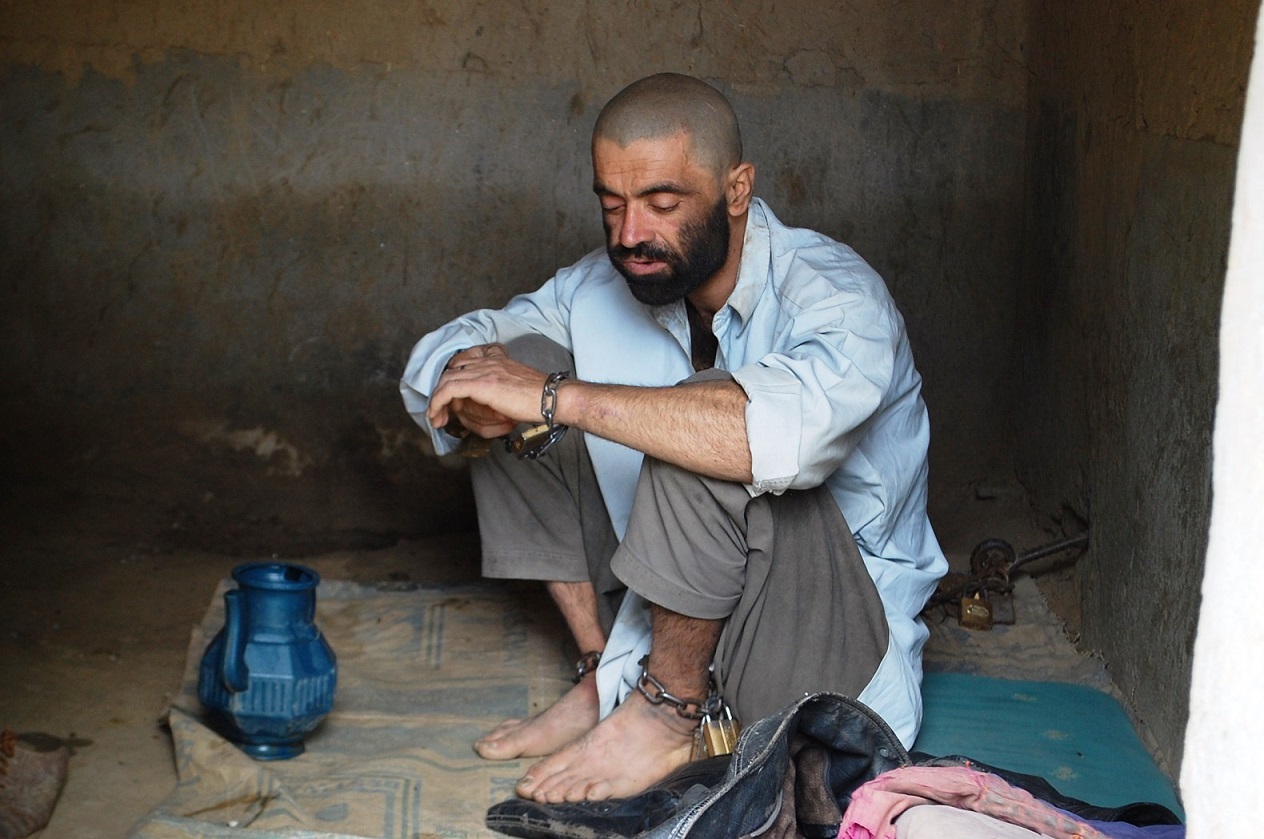
A patient sits in chains at the Amyalli Shrine located on the outskirts of the eastern city of Jalalabad. Photo by Ezzatullah Mehrdad.

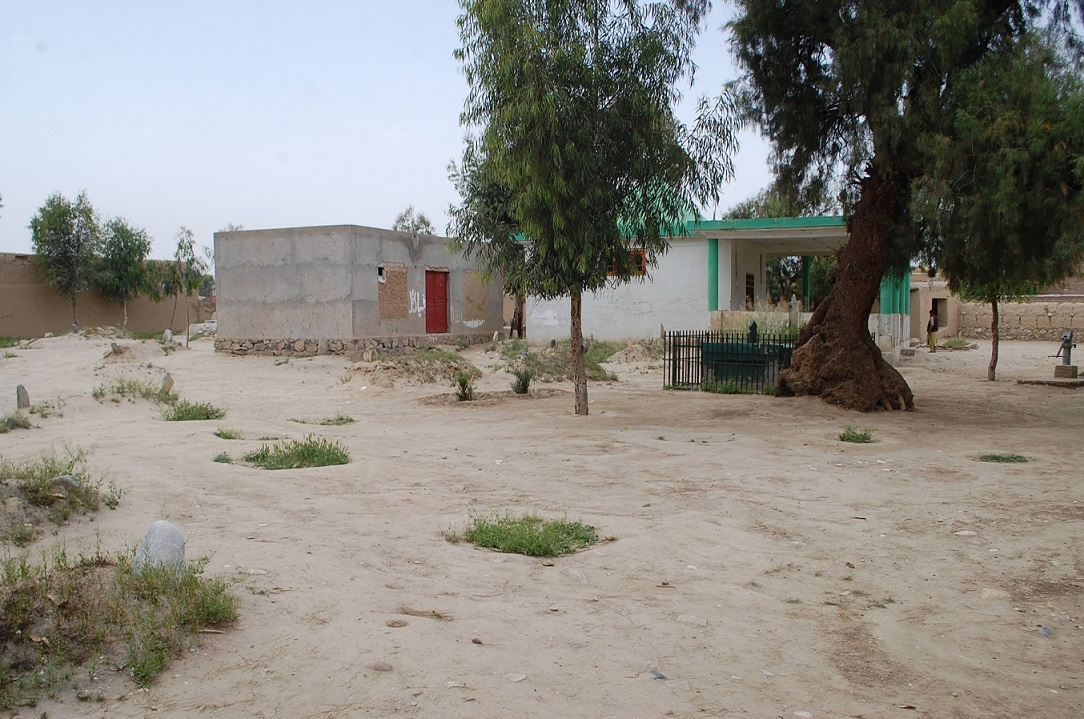
The Amyali Shrine on the outskirts of the eastern Afghan city of Jalalabad is primarily a pit stop for pilgrims seeking God's blessings, but it doubles up as a temporary shelter for the mentally ill.

Mentally ill people, known locally as “haunted”, are brought here by their families for 40 day-stints in the muddy yard of the shrine that has ten separated rooms. They are kept in chains for long parts of the day by a local caretaker and are made to eat and squat in the same place. Their daily sustenance is a piece of bread, a red chilli and a glass of water.

“Allah is great,” says an optimistic local taxi driver who took me to Amyali. “After 40 days in the shrine, the patients are cured.”

Such practices are not driven by superstition alone. Families with limited budgets face a tremendous burden in caring for their mentally ill relatives. Outside the capital — where it is inadequate — proper psychological care is often simply unavailable.

“If they receive (proper) treatment, their disorders might be controllable,” insists Dr. Jafar Ahmadi, an independent psychologist based in Kabul, who sees centres like the one near Jalalabad as reinforcing a culture of denial regarding mental health.

PTSD and Afghanistan's worrisome mental health landscape 

According to Afghanistan’s Health Ministry, one in two Afghans experiences stress due to the war in their country, while thousands suffer from diagnosable illness including Post-Traumatic Stress Disorder (PTSD), depression, schizophrenia, extreme anxiety, and bipolar disorder.

Although some of these conditions can be inherited, beleaguered doctors have little doubt that four decades of armed clashes, suicide bombings and airstrikes have reshaped the country's mental health landscape.

According to a new survey by Big Think, one in five Afghans suffer depression, more than anywhere in the world. The latest World Happiness Survey commissioned by the United Nations places the country as the third most unhappy globally, behind two other countries wracked by chronic violence and insecurity — South Sudan and the Central African Republic.

Ahmadi says that “at least one or two people are under treatment and recovering from suicide in hospitals across Kabul every night.” PTSD is one of the main drivers of suicidal tendencies, he added.

Social stigma is another barrier to accessing health treatment.

Bashir Ahmad Sarwari, who directs Department of Mental Health and Substance Abuse at the Afghan Ministry of Public Health, complains that poor understanding of mental health infiltrates every level of a system that should be rising to meet this national challenge.

“People do not know about mental health illness and come up with various names for sufferers — idiots, crazy, stupid, or haunted,” he told Global Voices.

“The stigma toward mental health illness is everywhere, not only among ordinary Afghans but also among doctors, staff, politicians, and policy-makers,” Sarwari argues.

The muddy yard of Amyalli Shrine in the outskirt of Jalalabad city. Photo by Ezzatullah Mehrdad.

Barely coping

Afghanistan's government claims 2,000 hospitals in the country are equipped to treat mental health patients.

The Mental Health and Addiction Recovery Hospital in Kabul, a specialized hospital where 100-150 patients each day come from across the country, is widely acknowledged as the best.

Ahmad Khetab Kakar, the hospital's director, told Global Voices that the hospital offers three core mental health services: hospitalization of mental health patients, outpatient care and prescription services, and ECT-Electronic therapy.

Yet critics say that even here, professional standards fall well short of those in other countries. Due in part to overwhelming demand, patients are often sent home quickly after being given a prescription for psychotropic drugs.

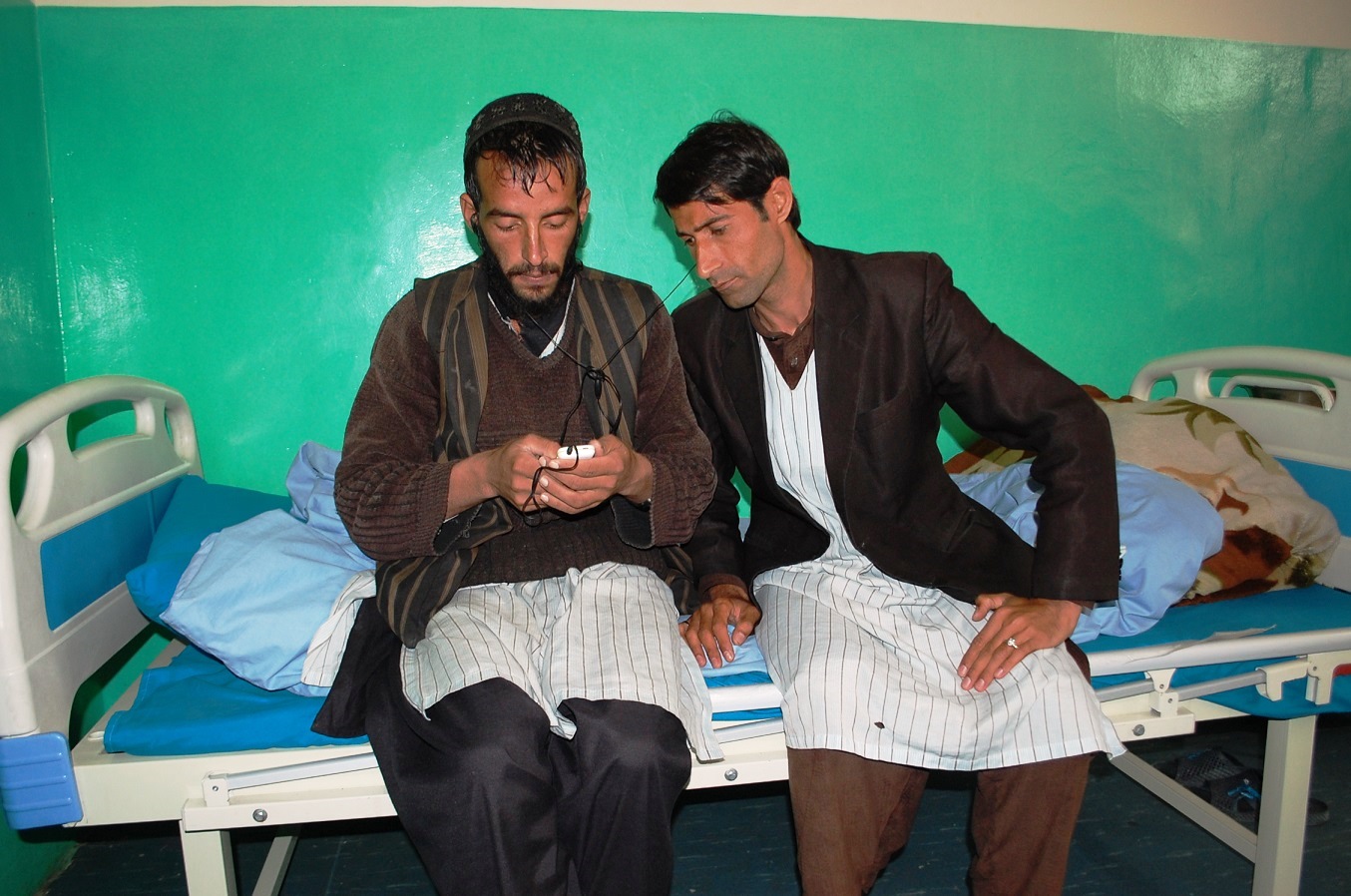
One patient who was able to secure a stay of over a week at the hospital, a 40-year old man from Baghlan province called Faridon, complained to Global Voices that it was difficult to persuade doctors that he needed to stay longer.

“The doctors wanted to discharge me,” said Faridon, who said his mental health problems had been compounded by marijuana use. “I begged them to keep me in longer.”

When this author observed Faridon's medical file was mostly blank, staff claimed information about his condition was in “another office.”

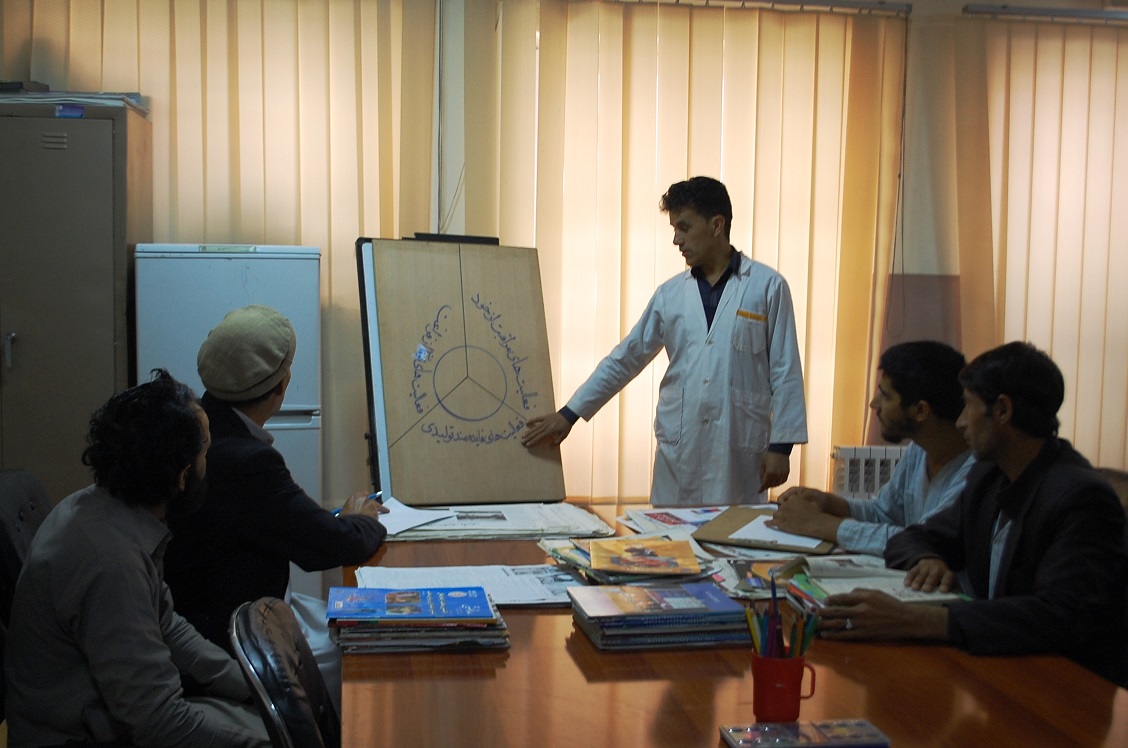
The Rehabilitation Center of the Mental Health and Drug Addiction Hospital hosts a session attended by four patients. Photo by Ezzatullah Mehrdad.

Dr. Ahmadi, the independent psychologist, says that a lack of mental health infrastructure in Afghanistan has moved many patients to seek treatment in neighbouring Pakistan and India, where facilities are typically better.

Due to lack of finances, however, they often return to Afghanistan before they can complete treatment regimes.

In Afghanistan, meanwhile, “medicines mentally ill people take can actually worsen their diseases”, because they are not complemented by proper therapy, Ahmadi warns.

“We cannot continue dealing with mental health ill people by writing out an amulet,” said Ahmadi, reflecting a practice popular among religious conservatives.

“Patient therapy is a distinctive process and it must be professionalized.”

Faridon, 40-year old, right, sits next to another patient in a bed of Mental Health Hospital, listening to a song. Photo by Ezzatullah Mehrdad.


from Global Voices http://bit.ly/2HPxAWL

http://bit.ly/2uOy2Nr, http://bit.ly/2G05abq, http://bit.ly/2Igcq4z,

DG ISPR says strict accountability process exists in armed forces

DG ISPR says strict accountability process exists in armed forces
DG ISPR

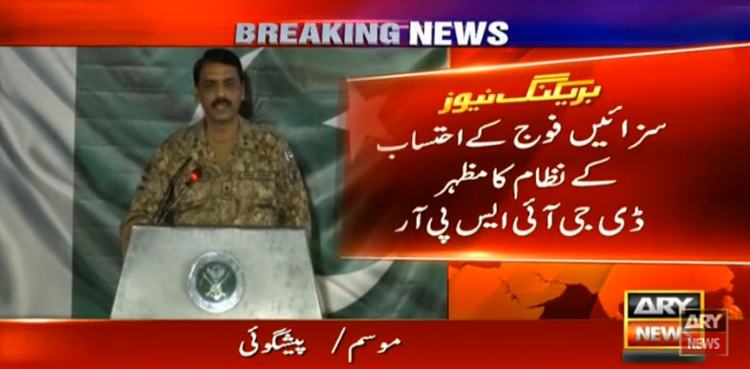
RAWALPINDI: Director General (DG) Inter-Services Public Relations (ISPR), Major General Asif Ghafoor has said that an effective and strict accountability process exist in armed forces which is evident from sentences awarded by Chief of Army Staff (COAS) General Qamar Javed Bajwa.

Major Gen Ghafoor said sentences awarded to three including two army men and a civilian were given in three separate cases.

“Officers were given stern punishment on the crime they had committed”, the DG ISPR said.

He further said that no one is above the law.

Earlier on Thursday, Chief of Army Staff  General Qamar Javed Bajwa had signed death warrants for a retired Brigadier and a doctor along with awarding 14 years imprisonment to a Lt. General (retd.).

According to Inter Services Public Relations (ISPR), “Two officers namely Brigadier Raja Rizwan (Retd) and a civilian officer Dr. Waseem Akram were awarded death sentences by COAS along with awarding 14 years worth of imprisonment to Lt. General Javed Iqbal (Retd).”

Read more: Army Chief signs death warrants of 14 terrorists

Following are the names and punishments of those being penalised by the Armed Forces:

  1. Retired Lieutenant General Javed Iqbal – Awarded 14 years rigorous imprisonment.
  2. Retired Brigadier Raja Rizwan – Awarded Death Sentence.
  3. Doctor Wasim Akram (Employed at a Sensitive Organisation) – Awarded Death Sentence.

“The officers were tried under Pakistan Army Act (PAA) and Official Secret Act by separate Field General Court Martial (FGCM) for separate cases,” read a statement issued by ISPR.

The post DG ISPR says strict accountability process exists in armed forces appeared first on ARYNEWS.


http://bit.ly/2G05abq
from ARYNEWS http://bit.ly/2W87W3u
via IFTTT

Explainer: China’s rare earth supplies could be vital bargaining chip in U.S. trade war

Explainer: China’s rare earth supplies could be vital bargaining chip in U.S. trade war

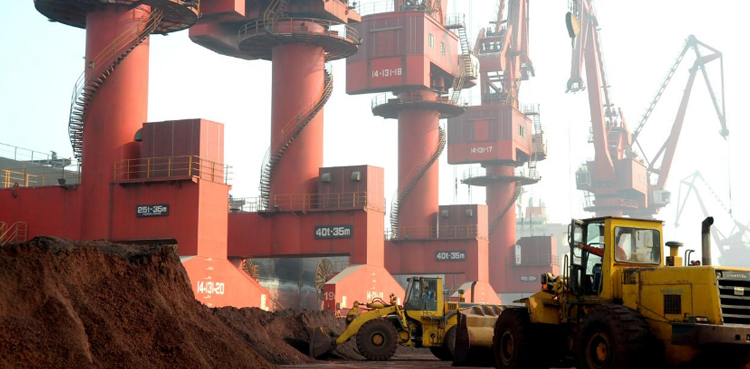
WASHINGTON: Rare earth elements are used in a wide range of consumer products, from iPhones to electric car motors, as well as military jet engines, satellites and lasers.

Rising tensions between the United States and China have sparked concerns that Beijing could use its dominant position as a supplier of rare earths for leverage in the trade war between the two global economic powers.

WHAT ARE RARE EARTHS USED IN?

Rare earths are used in rechargeable batteries for electric and hybrid cars, advanced ceramics, computers, DVD players, wind turbines, catalysts in cars and oil refineries, monitors, televisions, lighting, lasers, fiber optics, superconductors and glass polishing.

Several rare earth elements, such as neodymium and dysprosium, are critical to the motors used in electric vehicles.

RARE EARTHS IN MILITARY EQUIPMENT

Some rare earth minerals are essential in military equipment such as jet engines, missile guidance systems, antimissile defense systems, satellites, as well as in lasers.

Lanthanum, for example, is needed to manufacture night vision devices.

Read More: US trade war will only make us stronger, China’s top paper says

The U.S. Defense Department accounts for about 1% of U.S. demand, which in turn accounts for about 9% of global demand for rare earths, according to a 2016 report from the congressional U.S. Government Accountability Office.

WHICH COMPANIES ARE MOST DEPENDENT ON CHINESE SUPPLIES?

Companies such as Raytheon Co, Lockheed Martin Corp and BAE Systems Plc all make sophisticated missiles that use rare earths metals in their guidance systems, and sensors. Lockheed and BAE declined to comment. Raytheon did not respond to a request for comment.

Apple Inc uses rare earth elements in speakers, cameras and the so-called “haptic” engines that make its phones vibrate. The company says the elements are not available from traditional recyclers because they are used in such small amounts they cannot be recovered.

Since 2010, the government and private industry have built up stockpiles of rare earths and components that use them, according to Eugene Gholz, a former senior Pentagon supply chain expert, who teaches at the University of Notre Dame.

Some suppliers have scaled back their use of such elements, he said.

WHAT ARE RARE EARTHS AND WHERE DO THEY OCCUR?

Rare earth metals are a group of 17 elements – lanthanum, cerium, praseodymium, neodymium, promethium, samarium, europium, gadolinium, terbium, dysprosium, holmium, erbium, thulium, ytterbium, lutetium, scandium, yttrium – that appear in low concentrations in the ground.

Although they are more abundant than their name implies, they are difficult and costly to mine and process cleanly. China hosts most of the world’s processing capacity and supplied 80% of the rare earths imported by the United States from 2014 to 2017. In 2017, China accounted for 81% of the world’s rare earth production, data from the U.S. Geological Survey showed.

Importers made limited efforts to reduce rare earth consumption and dependence on China after a diplomatic dispute between China and Japan in 2010. Japan accused China of halting rare earth supplies for political reasons, sparking recognition worldwide of the risks of dependence on one supplier. China denied it had halted supplies.

Few alternative suppliers were able to compete with China, which is home to 37% of global rare earths reserves.

California’s Mountain Pass mine is the only operating U.S. rare earths facility. But MP Materials, owner of Mountain Pass, ships the roughly 50,000 tonnes of rare earth concentrate it extracts each year from California to China for processing. China has imposed a tariff of 25% on those imports during the trade war.

Australia’s Lynas Corporation Ltd this week said it signed a memorandum of understanding with Texas-based Blue Line Corp to build a rare earth processing facility in the United States.

Rare earths are also mined in India, South Africa, Canada, Australia, Estonia, Malaysia and Brazil.

HOW ARE RARE EARTHS AFFECTED BY U.S. TARIFFS?

So far, the U.S. government has exempted rare earths from tariffs on Chinese goods.

OPTIONS TO REDUCE RELIANCE ON CHINESE IMPORTS

U.S. senators introduced legislation in May to encourage development of domestic supplies.

Recycling has also emerged as a potential source for rare earth minerals.

Nebraska-based Rare Earth Salts is taking old fluorescent light tubes and recycling them for their rare earth elements, which comprise about 20 percent of the bulb, according to the Association of Lamp and Mercury Recyclers.

HOW HAVE RARE EARTHS PRICES REACTED TO THE RISING TENSIONS?

Having held largely steady for the past several months, the export prices of an array of rare earth elements have rallied strongly since Chinese President Xi Jinping’s visit to a rare earth processing firm in southern China on May 20 brought the sector under the spotlight.

The price of neodymium metal – used in magnets and speakers – increased 26.5% since May 20 from $50 per kilogram to $63.25/kg. Dysprosium metal (used in lasers), erbium oxide and gadolinium oxide (used in medical imaging and fuel cells) are up around 10%.

The post Explainer: China’s rare earth supplies could be vital bargaining chip in U.S. trade war appeared first on ARYNEWS.


http://bit.ly/2G05abq
from ARYNEWS http://bit.ly/2JQqtPY
via IFTTT

Mahathir proposes common Asia trading currency

Mahathir proposes common Asia trading currency

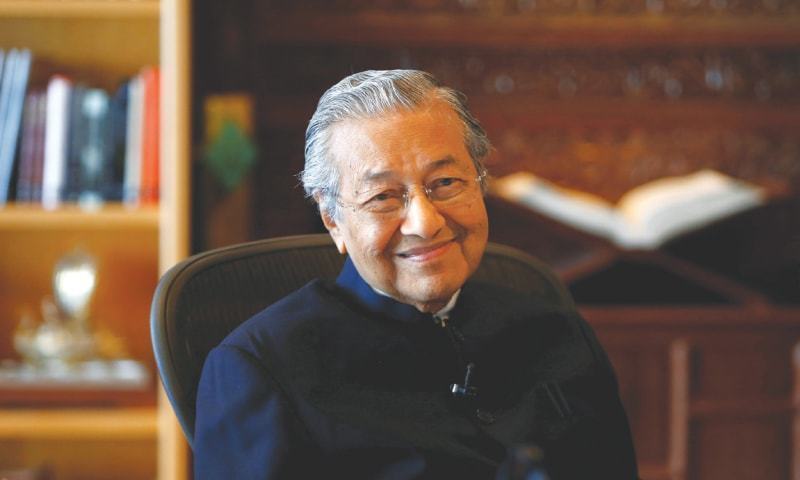
TOKYO: East Asia should consider a common regional trading currency based on gold to promote commerce, and free the region from relying on dollar transactions, Malaysia’s Prime Minister Mohamad Mahathir said on Thursday.

Mahathir said the proposed currency could be used for regional trade, but would not replace national currencies for use at the domestic level.

“In the Far East if you want to come together, we should start with a common trading currency, not to be used locally but for the purpose of settling of trade,” he said at the Future of Asia forum in Tokyo.

“At the moment we have to depend upon the US dollar but the US dollar is also not stable. So the currency that we propose should be based on gold because gold is much more stable,” he added.

He said the exchange rate of the regional currency would “relate to” the performance of individual countries and would help harmonise regional trade.

“That way we know much we owe, we know how much have to pay, in the currency of east Asia.” Mahathir, who is serving his second term in office after storming to a shock election victory last year, has a reputation as something of a financial maverick.

In 1998, he defied international experts and imposed capital controls to shield the economy amid a regional financial crisis, and he is a longtime critic of currency trading.


The post Mahathir proposes common Asia trading currency appeared first on ARYNEWS.


from ARYNEWS http://bit.ly/2Wwc2GN

http://bit.ly/2G05abq

Maryam’s tone against PM reflects her growing frustration: Awan

Maryam’s tone against PM reflects her growing frustration: Awan
Maryam. Firdous Ashiq Awan

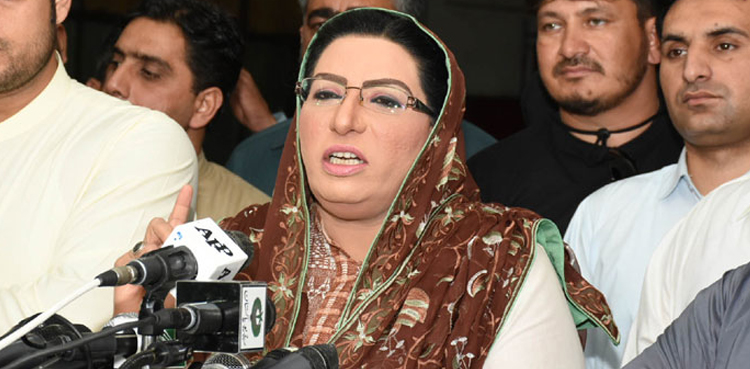
ISLAMABAD: Special Assistant to Prime Minister on Information Firdous Ashiq Awan on Friday said Pakistan Muslim League-Nawaz (PML-N) Vice President Maryam Safdar’s inappropriate tone about Prime Minister Imran Khan shows her growing frustration.

In her reaction expressed on Twitter, to PML-N leader’s allegation over PM, she said Maryam Safdar is scared that success of Imran Khan will bring benefits to the country and losses to her party.

Read more:‘Imran a puppet, pawn’: Maryam fires broadside at PM

Earlier on Tuesday, Maryam Nawaz lamented that former prime minister Nawaz Sharif who made Pakistan a nuclear power has been jailed.

“Imran, you are a puppet, a pawn and dance to someone else’s tunes,” she said and asked him to explain as to who is asking his government for a NRO-like deal.

The post Maryam’s tone against PM reflects her growing frustration: Awan appeared first on ARYNEWS.


from ARYNEWS http://bit.ly/30VwakV

http://bit.ly/2G05abq

PM Khan performs umrah with Bushra Bibi

PM Khan performs umrah with Bushra Bibi

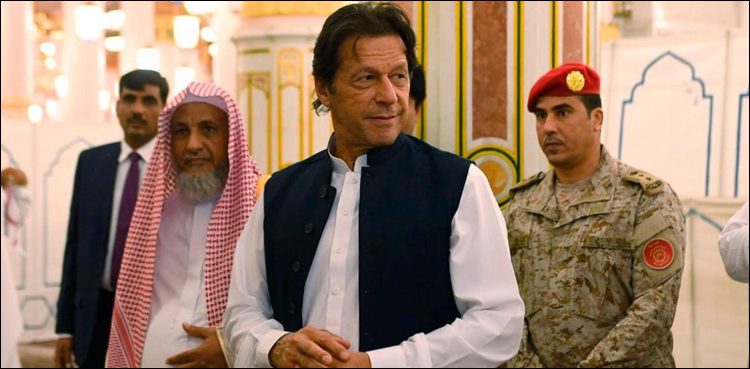
MAKKAH: Prime Minister Imran Khan performed umrah along with his wife Bushra Bibi and federal ministers in the holy city of Makkah.

The prime minister prayed for the development and prosperity of Pakistan. Chief Minister Punjab Usman Buzdar and Chief Minister Khyber Pakhtunkhwa Mehmood Khan also performed umrah with the premier.

Prior to arriving in Makkah, PM Khan also paid his respects on the Roza-e-Rasool (Peace Be Upon Him) and offered Nawafil on the sacred place of worship.

Prime Minister Imran Khan is in the Kingdom to represent Pakistan at the 14th Summit of Organization of Islamic Cooperation (OIC) being held in Makkah on Friday (today).

The conference titled ‘Makkah Summit: Together for the Future’ is being hosted by Saudi King Salman bin Abdulaziz Al Saud.

Read more: PM Imran Khan lands in KSA for OIC summit, visits Roza e Rasool (PBUH)

The conference aims to unite Muslim countries on one platform to better tackle the difficulties and challenges they are facing.

Before the prime minister’s visit, Foreign Minister of Pakistan Shah Mehmood Qureshi, who had arrived earlier in Saudi Arabia, participated in the ministerial meetings of Organization of Islamic Cooperation where he met various Foreign Ministers and members of the OIC.


The post PM Khan performs umrah with Bushra Bibi appeared first on ARYNEWS.


from ARYNEWS http://bit.ly/2XgS7bP

http://bit.ly/2G05abq

SHC acquits suspect in explosives possession case

SHC acquits suspect in explosives possession case
SHC, explosives case

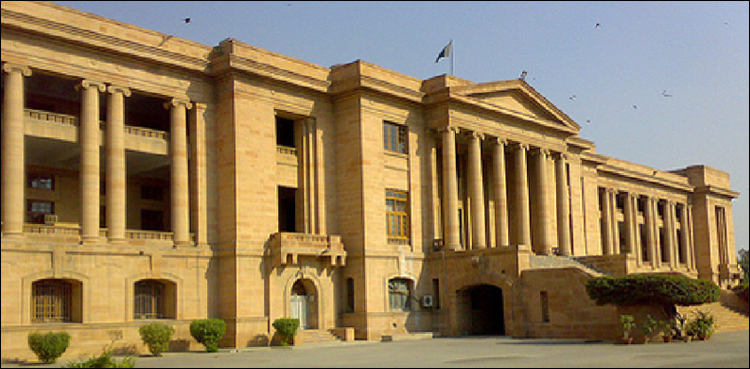
KARACHI: Sindh High Court has acquitted a suspect nominated in a case related to possession of explosives, abolishing a trial court’s verdict, ARY News reported on Friday.

As per details, Sindh High Court heard on a plea filed by suspect namely Javed seeking sentence suspension, awarded to him over possession of explosive material.

The bench of the SHC hearing the case turned down the trial court’s decision of serving punishment to Javed and ordered his release.

A trial court had sentenced accused Javed to 14 years of imprisonment back in 2016.

Back in the September, 2017, the SHC had set aside the conviction of five terror suspects in a case related to possession of illicit arms and explosive material.

Read more: SHC sets aside conviction of five terror suspects, orders release

Among the five convicts Abdul Haq and Ali Raza were sentenced to fourteen years in jail, Kashif was to undergo imprisonment of eight years, while Salim and Arshad were sent to prison for seven years by an anti-terrorism court.

A division bench of the high court had announced its verdict on the appeals of five suspects after hearing arguments from defense and prosecution sides.

The court ordered their release provided that they were not required in any other criminal case.

The post SHC acquits suspect in explosives possession case appeared first on ARYNEWS.


from ARYNEWS http://bit.ly/2wAF7SB

http://bit.ly/2G05abq

Indian troops martyr youth in occupied Kashmir

Indian troops martyr youth in occupied Kashmir
Indian troops

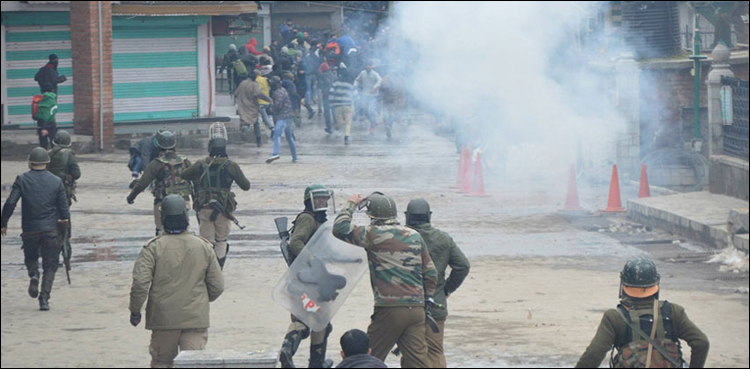
SRINAGAR: Indian troops in their fresh act of state terrorism on Friday martyred a youth in Shopian, an area of occupied Kashmir.  

According to the Kashmir Media Services (KMS), the youth was killed during a cordon and search operation in the area.

The internet and mobile services have been suspended in Shopian soon after the martyrdom of the youth by the puppet administration, said KMS.

On Wednesday, more than 50 people were injured, as the Indian forces used brute force by  on peaceful protesters in occupied Kulgam district.

As per details, people hit to the streets in Tazipora-Mohammadpora area after the killing of a youth by Indian troops during a cordon and search operation in pre-dawn hours.

Read more: OIC strongly condemns Indian HR abuse in held Kashmir

The injured were shifted to Primary Health Care (PHC) Muhammadpora and six of them were taken to district hospital Kulgam for treatment.

The six critically injured were identified as Nadeem Ahmad (pellet injury in left eye), Nawaz Ahmad (pellet injury in right eye), Adnan (pellet injury in left eye), Yawar Ahmad (bullet injuries in abdomen), Mohsin Ahmad (pellet injuries in body) and Basit Ahmad (pellet injuries on both arms).

The post Indian troops martyr youth in occupied Kashmir appeared first on ARYNEWS.


from ARYNEWS http://bit.ly/2KeurkF

http://bit.ly/2G05abq

Jumatul Wida being observed today

Jumatul Wida being observed today
Jumatul Wida

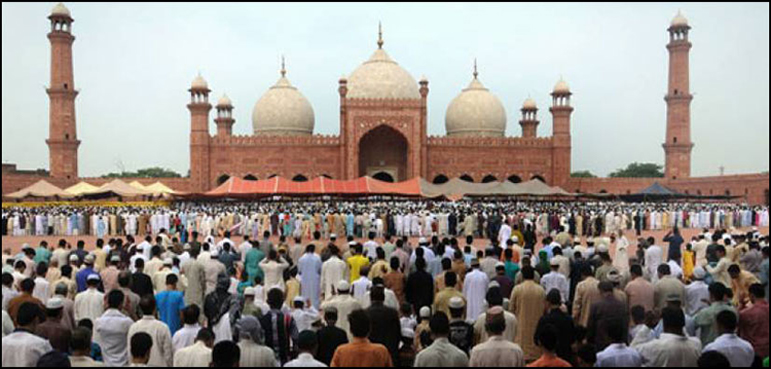
KARACHI: Jumatul Wida is being observed countrywide on Friday (today) amid foolproof security measures, ARY News reported.

The authorities have made special security arrangements to ensure safety of people offering prayers at mosques and Imambargahs.

Jumatul Wida has a special significance for Muslim since it is a prelude to the departure of holy month of Ramazan and considered the harbinger of the end of the showering of divine blessings that characterizes the holy month.

Last Friday of Ramazan is also observed as Youm al-Quds (Al-Quds Day) in Pakistan to express support and solidarity with oppressed Muslims of Israeli occupied Palestine territories. Rallies and processions will also be organized across the country to observe the Al-Quds Day.

Prayer leaders in their sermons will highlight the importance of unity and sectarian harmony among the people of all religious schools of thought.

Special prayers will also be offered for the progress and prosperity of the country on the occasion.

The post Jumatul Wida being observed today appeared first on ARYNEWS.


from ARYNEWS http://bit.ly/2wwX98k

http://bit.ly/2G05abq

Police thwarts terror bid in Quetta

Police thwarts terror bid in Quetta
Quetta

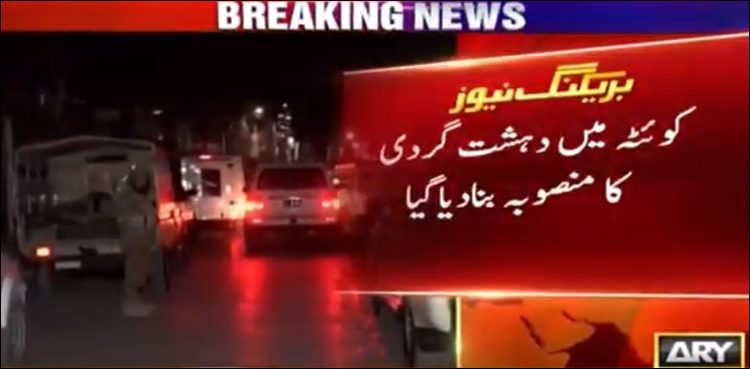
QUETTA: Police foiled a terror bid in Quetta as a suicide bomb, who tried to attack an Imambargah was shot dead, ARY News reported on Friday.

As per details, a suicide bomber wanted to enter the Imambargah, situated in the provincial capital city of Balochistan.

However, vigilant security forces personnel shot him dead on the spot and averted huge loss of life and property.

Detailing about the incident, the police said the suicide bomber was stopped at the entrance of the Imambargah by the policemen.

Deputy Inspector General of Police (DIG) Abdul Razaque said a suicide bomber, wearing explosive jacket, wanted to storm the Imambargah, but he was shot dead in the prompt action by the police, deployed outside at the security.

In order to get safe passage from the entry gate of the Imambargah, the bomber was wearing ladies clothes, said the DIG.

Mr Razaque said the security already was put on high-alert after the prior information of a suicide attack in Quetta.

Earlier, the attacker threw a hand grenade at security personnel deputed at the Imambargah in which one personnel was injured.

Chief minister Balochistan has lauded the performance of the security personnel and announced a cash award of rupees one million for him.

The post Police thwarts terror bid in Quetta appeared first on ARYNEWS.


from ARYNEWS http://bit.ly/2KfODTp

http://bit.ly/2G05abq

PM Imran represents Pakistan at 14th OIC Summit today

PM Imran represents Pakistan at 14th OIC Summit today
Imran Khan

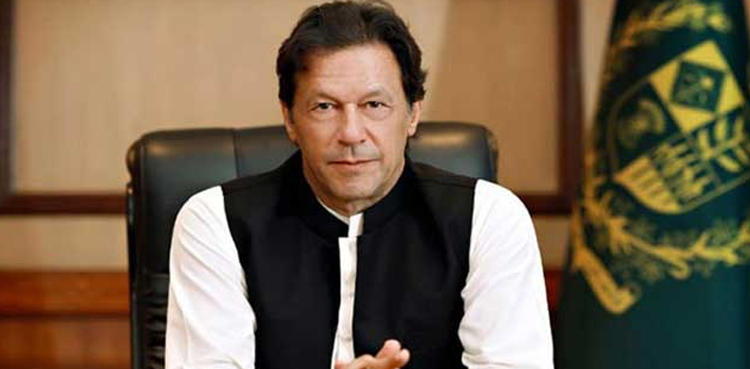
JEDDAH: Prime Minister Imran Khan will represent Pakistan at the 14th Summit of Organization of Islamic Cooperation (OIC) being held in Makkah on Friday (today). 

The conference titled ‘Makkah Summit: Together for the Future’ is being hosted by Saudi King Salman bin Abdulaziz Al Saud.

The conference aims to unite Muslim countries on one platform to better tackle the difficulties and challenges they are facing.

Earlier, on his arrival in Madina Munawwarah, Prime Minister Imran Khan visited Roza-e-Rasool (PBUH) and offered nawafil and prayed for the progress and prosperity of the country and Muslim Ummah.

On the occasion, the doors of Roza-e-Rasool (Peace Be Upon Him) were specially opened for the premier.

Read more: PM Imran Khan lands in KSA for OIC summit, visits Roza e Rasool (PBUH)

Prior to the Prime Minister’s visit, the Foreign Minister of Pakistan Shah Mehmood Qureshi who had arrived earlier to Saudi Arabia and participated in the ministerial meetings of Organization of Islamic Cooperation (OIC) where he met various Foreign Ministers and members of the OIC.

Foreign Minister Shah Mehmood Qureshi opined in a meeting with the OIC secretary general that the solution to challenges being faced by the Muslim Ummah were unity and cohesion between the Muslim states.

The post PM Imran represents Pakistan at 14th OIC Summit today appeared first on ARYNEWS.


from ARYNEWS http://bit.ly/2WfsgVw

http://bit.ly/2G05abq

DG ISPR says strict accountability process exists in armed forces

DG ISPR says strict accountability process exists in armed forces
DG ISPR

RAWALPINDI: Director General (DG) Inter-Services Public Relations (ISPR), Major General Asif Ghafoor has said that an effective and strict accountability process exist in armed forces which is evident from sentences awarded by Chief of Army Staff (COAS) General Qamar Javed Bajwa.

Major Gen Ghafoor said sentences awarded to three including two army men and a civilian were given in three separate cases.

“Officers were given stern punishment on the crime they had committed”, the DG ISPR said.

He further said that no one is above the law.

Earlier on Thursday, Chief of Army Staff  General Qamar Javed Bajwa had signed death warrants for a retired Brigadier and a doctor along with awarding 14 years imprisonment to a Lt. General (retd.).

According to Inter Services Public Relations (ISPR), “Two officers namely Brigadier Raja Rizwan (Retd) and a civilian officer Dr. Waseem Akram were awarded death sentences by COAS along with awarding 14 years worth of imprisonment to Lt. General Javed Iqbal (Retd).”

Read more: Army Chief signs death warrants of 14 terrorists

Following are the names and punishments of those being penalised by the Armed Forces:

  1. Retired Lieutenant General Javed Iqbal – Awarded 14 years rigorous imprisonment.
  2. Retired Brigadier Raja Rizwan – Awarded Death Sentence.
  3. Doctor Wasim Akram (Employed at a Sensitive Organisation) – Awarded Death Sentence.

“The officers were tried under Pakistan Army Act (PAA) and Official Secret Act by separate Field General Court Martial (FGCM) for separate cases,” read a statement issued by ISPR.

The post DG ISPR says strict accountability process exists in armed forces appeared first on ARYNEWS.


from ARYNEWS http://bit.ly/2W87W3u

http://bit.ly/2G05abq

Explainer: China’s rare earth supplies could be vital bargaining chip in U.S. trade war

Explainer: China’s rare earth supplies could be vital bargaining chip in U.S. trade war

WASHINGTON: Rare earth elements are used in a wide range of consumer products, from iPhones to electric car motors, as well as military jet engines, satellites and lasers.

Rising tensions between the United States and China have sparked concerns that Beijing could use its dominant position as a supplier of rare earths for leverage in the trade war between the two global economic powers.

WHAT ARE RARE EARTHS USED IN?

Rare earths are used in rechargeable batteries for electric and hybrid cars, advanced ceramics, computers, DVD players, wind turbines, catalysts in cars and oil refineries, monitors, televisions, lighting, lasers, fiber optics, superconductors and glass polishing.

Several rare earth elements, such as neodymium and dysprosium, are critical to the motors used in electric vehicles.

RARE EARTHS IN MILITARY EQUIPMENT

Some rare earth minerals are essential in military equipment such as jet engines, missile guidance systems, antimissile defense systems, satellites, as well as in lasers.

Lanthanum, for example, is needed to manufacture night vision devices.

Read More: US trade war will only make us stronger, China’s top paper says

The U.S. Defense Department accounts for about 1% of U.S. demand, which in turn accounts for about 9% of global demand for rare earths, according to a 2016 report from the congressional U.S. Government Accountability Office.

WHICH COMPANIES ARE MOST DEPENDENT ON CHINESE SUPPLIES?

Companies such as Raytheon Co, Lockheed Martin Corp and BAE Systems Plc all make sophisticated missiles that use rare earths metals in their guidance systems, and sensors. Lockheed and BAE declined to comment. Raytheon did not respond to a request for comment.

Apple Inc uses rare earth elements in speakers, cameras and the so-called “haptic” engines that make its phones vibrate. The company says the elements are not available from traditional recyclers because they are used in such small amounts they cannot be recovered.

Since 2010, the government and private industry have built up stockpiles of rare earths and components that use them, according to Eugene Gholz, a former senior Pentagon supply chain expert, who teaches at the University of Notre Dame.

Some suppliers have scaled back their use of such elements, he said.

WHAT ARE RARE EARTHS AND WHERE DO THEY OCCUR?

Rare earth metals are a group of 17 elements – lanthanum, cerium, praseodymium, neodymium, promethium, samarium, europium, gadolinium, terbium, dysprosium, holmium, erbium, thulium, ytterbium, lutetium, scandium, yttrium – that appear in low concentrations in the ground.

Although they are more abundant than their name implies, they are difficult and costly to mine and process cleanly. China hosts most of the world’s processing capacity and supplied 80% of the rare earths imported by the United States from 2014 to 2017. In 2017, China accounted for 81% of the world’s rare earth production, data from the U.S. Geological Survey showed.

Importers made limited efforts to reduce rare earth consumption and dependence on China after a diplomatic dispute between China and Japan in 2010. Japan accused China of halting rare earth supplies for political reasons, sparking recognition worldwide of the risks of dependence on one supplier. China denied it had halted supplies.

Few alternative suppliers were able to compete with China, which is home to 37% of global rare earths reserves.

California’s Mountain Pass mine is the only operating U.S. rare earths facility. But MP Materials, owner of Mountain Pass, ships the roughly 50,000 tonnes of rare earth concentrate it extracts each year from California to China for processing. China has imposed a tariff of 25% on those imports during the trade war.

Australia’s Lynas Corporation Ltd this week said it signed a memorandum of understanding with Texas-based Blue Line Corp to build a rare earth processing facility in the United States.

Rare earths are also mined in India, South Africa, Canada, Australia, Estonia, Malaysia and Brazil.

HOW ARE RARE EARTHS AFFECTED BY U.S. TARIFFS?

So far, the U.S. government has exempted rare earths from tariffs on Chinese goods.

OPTIONS TO REDUCE RELIANCE ON CHINESE IMPORTS

U.S. senators introduced legislation in May to encourage development of domestic supplies.

Recycling has also emerged as a potential source for rare earth minerals.

Nebraska-based Rare Earth Salts is taking old fluorescent light tubes and recycling them for their rare earth elements, which comprise about 20 percent of the bulb, according to the Association of Lamp and Mercury Recyclers.

HOW HAVE RARE EARTHS PRICES REACTED TO THE RISING TENSIONS?

Having held largely steady for the past several months, the export prices of an array of rare earth elements have rallied strongly since Chinese President Xi Jinping’s visit to a rare earth processing firm in southern China on May 20 brought the sector under the spotlight.

The price of neodymium metal – used in magnets and speakers – increased 26.5% since May 20 from $50 per kilogram to $63.25/kg. Dysprosium metal (used in lasers), erbium oxide and gadolinium oxide (used in medical imaging and fuel cells) are up around 10%.

The post Explainer: China’s rare earth supplies could be vital bargaining chip in U.S. trade war appeared first on ARYNEWS.


from ARYNEWS http://bit.ly/2JQqtPY

http://bit.ly/2G05abq
Mahathir proposes common Asia trading currency

Mahathir proposes common Asia trading currency

TOKYO: East Asia should consider a common regional trading currency based on gold to promote commerce, and free the region from relying on dollar transactions, Malaysia’s Prime Minister Mohamad Mahathir said on Thursday.

Mahathir said the proposed currency could be used for regional trade, but would not replace national currencies for use at the domestic level.

“In the Far East if you want to come together, we should start with a common trading currency, not to be used locally but for the purpose of settling of trade,” he said at the Future of Asia forum in Tokyo.

“At the moment we have to depend upon the US dollar but the US dollar is also not stable. So the currency that we propose should be based on gold because gold is much more stable,” he added.

He said the exchange rate of the regional currency would “relate to” the performance of individual countries and would help harmonise regional trade.

“That way we know much we owe, we know how much have to pay, in the currency of east Asia.” Mahathir, who is serving his second term in office after storming to a shock election victory last year, has a reputation as something of a financial maverick.

In 1998, he defied international experts and imposed capital controls to shield the economy amid a regional financial crisis, and he is a longtime critic of currency trading.


The post Mahathir proposes common Asia trading currency appeared first on ARYNEWS.


from ARYNEWS http://bit.ly/2Wwc2GN

Maryam’s tone against PM reflects her growing frustration: Awan

Maryam’s tone against PM reflects her growing frustration: Awan
Maryam. Firdous Ashiq Awan

ISLAMABAD: Special Assistant to Prime Minister on Information Firdous Ashiq Awan on Friday said Pakistan Muslim League-Nawaz (PML-N) Vice President Maryam Safdar’s inappropriate tone about Prime Minister Imran Khan shows her growing frustration.

In her reaction expressed on Twitter, to PML-N leader’s allegation over PM, she said Maryam Safdar is scared that success of Imran Khan will bring benefits to the country and losses to her party.

Read more:‘Imran a puppet, pawn’: Maryam fires broadside at PM

Earlier on Tuesday, Maryam Nawaz lamented that former prime minister Nawaz Sharif who made Pakistan a nuclear power has been jailed.

“Imran, you are a puppet, a pawn and dance to someone else’s tunes,” she said and asked him to explain as to who is asking his government for a NRO-like deal.

The post Maryam’s tone against PM reflects her growing frustration: Awan appeared first on ARYNEWS.


from ARYNEWS http://bit.ly/30VwakV

PM Khan performs umrah with Bushra Bibi

PM Khan performs umrah with Bushra Bibi

MAKKAH: Prime Minister Imran Khan performed umrah along with his wife Bushra Bibi and federal ministers in the holy city of Makkah.

The prime minister prayed for the development and prosperity of Pakistan. Chief Minister Punjab Usman Buzdar and Chief Minister Khyber Pakhtunkhwa Mehmood Khan also performed umrah with the premier.

Prior to arriving in Makkah, PM Khan also paid his respects on the Roza-e-Rasool (Peace Be Upon Him) and offered Nawafil on the sacred place of worship.

Prime Minister Imran Khan is in the Kingdom to represent Pakistan at the 14th Summit of Organization of Islamic Cooperation (OIC) being held in Makkah on Friday (today).

The conference titled ‘Makkah Summit: Together for the Future’ is being hosted by Saudi King Salman bin Abdulaziz Al Saud.

Read more: PM Imran Khan lands in KSA for OIC summit, visits Roza e Rasool (PBUH)

The conference aims to unite Muslim countries on one platform to better tackle the difficulties and challenges they are facing.

Before the prime minister’s visit, Foreign Minister of Pakistan Shah Mehmood Qureshi, who had arrived earlier in Saudi Arabia, participated in the ministerial meetings of Organization of Islamic Cooperation where he met various Foreign Ministers and members of the OIC.


The post PM Khan performs umrah with Bushra Bibi appeared first on ARYNEWS.


from ARYNEWS http://bit.ly/2XgS7bP

SHC acquits suspect in explosives possession case

SHC acquits suspect in explosives possession case
SHC, explosives case

KARACHI: Sindh High Court has acquitted a suspect nominated in a case related to possession of explosives, abolishing a trial court’s verdict, ARY News reported on Friday.

As per details, Sindh High Court heard on a plea filed by suspect namely Javed seeking sentence suspension, awarded to him over possession of explosive material.

The bench of the SHC hearing the case turned down the trial court’s decision of serving punishment to Javed and ordered his release.

A trial court had sentenced accused Javed to 14 years of imprisonment back in 2016.

Back in the September, 2017, the SHC had set aside the conviction of five terror suspects in a case related to possession of illicit arms and explosive material.

Read more: SHC sets aside conviction of five terror suspects, orders release

Among the five convicts Abdul Haq and Ali Raza were sentenced to fourteen years in jail, Kashif was to undergo imprisonment of eight years, while Salim and Arshad were sent to prison for seven years by an anti-terrorism court.

A division bench of the high court had announced its verdict on the appeals of five suspects after hearing arguments from defense and prosecution sides.

The court ordered their release provided that they were not required in any other criminal case.

The post SHC acquits suspect in explosives possession case appeared first on ARYNEWS.


from ARYNEWS http://bit.ly/2wAF7SB

Indian troops martyr youth in occupied Kashmir

Indian troops martyr youth in occupied Kashmir
Indian troops

SRINAGAR: Indian troops in their fresh act of state terrorism on Friday martyred a youth in Shopian, an area of occupied Kashmir.  

According to the Kashmir Media Services (KMS), the youth was killed during a cordon and search operation in the area.

The internet and mobile services have been suspended in Shopian soon after the martyrdom of the youth by the puppet administration, said KMS.

On Wednesday, more than 50 people were injured, as the Indian forces used brute force by  on peaceful protesters in occupied Kulgam district.

As per details, people hit to the streets in Tazipora-Mohammadpora area after the killing of a youth by Indian troops during a cordon and search operation in pre-dawn hours.

Read more: OIC strongly condemns Indian HR abuse in held Kashmir

The injured were shifted to Primary Health Care (PHC) Muhammadpora and six of them were taken to district hospital Kulgam for treatment.

The six critically injured were identified as Nadeem Ahmad (pellet injury in left eye), Nawaz Ahmad (pellet injury in right eye), Adnan (pellet injury in left eye), Yawar Ahmad (bullet injuries in abdomen), Mohsin Ahmad (pellet injuries in body) and Basit Ahmad (pellet injuries on both arms).

The post Indian troops martyr youth in occupied Kashmir appeared first on ARYNEWS.


from ARYNEWS http://bit.ly/2KeurkF

Jumatul Wida being observed today

Jumatul Wida being observed today
Jumatul Wida

KARACHI: Jumatul Wida is being observed countrywide on Friday (today) amid foolproof security measures, ARY News reported.

The authorities have made special security arrangements to ensure safety of people offering prayers at mosques and Imambargahs.

Jumatul Wida has a special significance for Muslim since it is a prelude to the departure of holy month of Ramazan and considered the harbinger of the end of the showering of divine blessings that characterizes the holy month.

Last Friday of Ramazan is also observed as Youm al-Quds (Al-Quds Day) in Pakistan to express support and solidarity with oppressed Muslims of Israeli occupied Palestine territories. Rallies and processions will also be organized across the country to observe the Al-Quds Day.

Prayer leaders in their sermons will highlight the importance of unity and sectarian harmony among the people of all religious schools of thought.

Special prayers will also be offered for the progress and prosperity of the country on the occasion.

The post Jumatul Wida being observed today appeared first on ARYNEWS.


from ARYNEWS http://bit.ly/2wwX98k

Police thwarts terror bid in Quetta

Police thwarts terror bid in Quetta
Quetta

QUETTA: Police foiled a terror bid in Quetta as a suicide bomb, who tried to attack an Imambargah was shot dead, ARY News reported on Friday.

As per details, a suicide bomber wanted to enter the Imambargah, situated in the provincial capital city of Balochistan.

However, vigilant security forces personnel shot him dead on the spot and averted huge loss of life and property.

Detailing about the incident, the police said the suicide bomber was stopped at the entrance of the Imambargah by the policemen.

Deputy Inspector General of Police (DIG) Abdul Razaque said a suicide bomber, wearing explosive jacket, wanted to storm the Imambargah, but he was shot dead in the prompt action by the police, deployed outside at the security.

In order to get safe passage from the entry gate of the Imambargah, the bomber was wearing ladies clothes, said the DIG.

Mr Razaque said the security already was put on high-alert after the prior information of a suicide attack in Quetta.

Earlier, the attacker threw a hand grenade at security personnel deputed at the Imambargah in which one personnel was injured.

Chief minister Balochistan has lauded the performance of the security personnel and announced a cash award of rupees one million for him.

The post Police thwarts terror bid in Quetta appeared first on ARYNEWS.


from ARYNEWS http://bit.ly/2KfODTp

PM Imran represents Pakistan at 14th OIC Summit today

PM Imran represents Pakistan at 14th OIC Summit today
Imran Khan

JEDDAH: Prime Minister Imran Khan will represent Pakistan at the 14th Summit of Organization of Islamic Cooperation (OIC) being held in Makkah on Friday (today). 

The conference titled ‘Makkah Summit: Together for the Future’ is being hosted by Saudi King Salman bin Abdulaziz Al Saud.

The conference aims to unite Muslim countries on one platform to better tackle the difficulties and challenges they are facing.

Earlier, on his arrival in Madina Munawwarah, Prime Minister Imran Khan visited Roza-e-Rasool (PBUH) and offered nawafil and prayed for the progress and prosperity of the country and Muslim Ummah.

On the occasion, the doors of Roza-e-Rasool (Peace Be Upon Him) were specially opened for the premier.

Read more: PM Imran Khan lands in KSA for OIC summit, visits Roza e Rasool (PBUH)

Prior to the Prime Minister’s visit, the Foreign Minister of Pakistan Shah Mehmood Qureshi who had arrived earlier to Saudi Arabia and participated in the ministerial meetings of Organization of Islamic Cooperation (OIC) where he met various Foreign Ministers and members of the OIC.

Foreign Minister Shah Mehmood Qureshi opined in a meeting with the OIC secretary general that the solution to challenges being faced by the Muslim Ummah were unity and cohesion between the Muslim states.

The post PM Imran represents Pakistan at 14th OIC Summit today appeared first on ARYNEWS.


from ARYNEWS http://bit.ly/2WfsgVw

DG ISPR says strict accountability process exists in armed forces

DG ISPR says strict accountability process exists in armed forces
DG ISPR

RAWALPINDI: Director General (DG) Inter-Services Public Relations (ISPR), Major General Asif Ghafoor has said that an effective and strict accountability process exist in armed forces which is evident from sentences awarded by Chief of Army Staff (COAS) General Qamar Javed Bajwa.

Major Gen Ghafoor said sentences awarded to three including two army men and a civilian were given in three separate cases.

“Officers were given stern punishment on the crime they had committed”, the DG ISPR said.

He further said that no one is above the law.

Earlier on Thursday, Chief of Army Staff  General Qamar Javed Bajwa had signed death warrants for a retired Brigadier and a doctor along with awarding 14 years imprisonment to a Lt. General (retd.).

According to Inter Services Public Relations (ISPR), “Two officers namely Brigadier Raja Rizwan (Retd) and a civilian officer Dr. Waseem Akram were awarded death sentences by COAS along with awarding 14 years worth of imprisonment to Lt. General Javed Iqbal (Retd).”

Read more: Army Chief signs death warrants of 14 terrorists

Following are the names and punishments of those being penalised by the Armed Forces:

  1. Retired Lieutenant General Javed Iqbal – Awarded 14 years rigorous imprisonment.
  2. Retired Brigadier Raja Rizwan – Awarded Death Sentence.
  3. Doctor Wasim Akram (Employed at a Sensitive Organisation) – Awarded Death Sentence.

“The officers were tried under Pakistan Army Act (PAA) and Official Secret Act by separate Field General Court Martial (FGCM) for separate cases,” read a statement issued by ISPR.

The post DG ISPR says strict accountability process exists in armed forces appeared first on ARYNEWS.


from ARYNEWS http://bit.ly/2W87W3u

Explainer: China’s rare earth supplies could be vital bargaining chip in U.S. trade war

Explainer: China’s rare earth supplies could be vital bargaining chip in U.S. trade war

WASHINGTON: Rare earth elements are used in a wide range of consumer products, from iPhones to electric car motors, as well as military jet engines, satellites and lasers.

Rising tensions between the United States and China have sparked concerns that Beijing could use its dominant position as a supplier of rare earths for leverage in the trade war between the two global economic powers.

WHAT ARE RARE EARTHS USED IN?

Rare earths are used in rechargeable batteries for electric and hybrid cars, advanced ceramics, computers, DVD players, wind turbines, catalysts in cars and oil refineries, monitors, televisions, lighting, lasers, fiber optics, superconductors and glass polishing.

Several rare earth elements, such as neodymium and dysprosium, are critical to the motors used in electric vehicles.

RARE EARTHS IN MILITARY EQUIPMENT

Some rare earth minerals are essential in military equipment such as jet engines, missile guidance systems, antimissile defense systems, satellites, as well as in lasers.

Lanthanum, for example, is needed to manufacture night vision devices.

Read More: US trade war will only make us stronger, China’s top paper says

The U.S. Defense Department accounts for about 1% of U.S. demand, which in turn accounts for about 9% of global demand for rare earths, according to a 2016 report from the congressional U.S. Government Accountability Office.

WHICH COMPANIES ARE MOST DEPENDENT ON CHINESE SUPPLIES?

Companies such as Raytheon Co, Lockheed Martin Corp and BAE Systems Plc all make sophisticated missiles that use rare earths metals in their guidance systems, and sensors. Lockheed and BAE declined to comment. Raytheon did not respond to a request for comment.

Apple Inc uses rare earth elements in speakers, cameras and the so-called “haptic” engines that make its phones vibrate. The company says the elements are not available from traditional recyclers because they are used in such small amounts they cannot be recovered.

Since 2010, the government and private industry have built up stockpiles of rare earths and components that use them, according to Eugene Gholz, a former senior Pentagon supply chain expert, who teaches at the University of Notre Dame.

Some suppliers have scaled back their use of such elements, he said.

WHAT ARE RARE EARTHS AND WHERE DO THEY OCCUR?

Rare earth metals are a group of 17 elements – lanthanum, cerium, praseodymium, neodymium, promethium, samarium, europium, gadolinium, terbium, dysprosium, holmium, erbium, thulium, ytterbium, lutetium, scandium, yttrium – that appear in low concentrations in the ground.

Although they are more abundant than their name implies, they are difficult and costly to mine and process cleanly. China hosts most of the world’s processing capacity and supplied 80% of the rare earths imported by the United States from 2014 to 2017. In 2017, China accounted for 81% of the world’s rare earth production, data from the U.S. Geological Survey showed.

Importers made limited efforts to reduce rare earth consumption and dependence on China after a diplomatic dispute between China and Japan in 2010. Japan accused China of halting rare earth supplies for political reasons, sparking recognition worldwide of the risks of dependence on one supplier. China denied it had halted supplies.

Few alternative suppliers were able to compete with China, which is home to 37% of global rare earths reserves.

California’s Mountain Pass mine is the only operating U.S. rare earths facility. But MP Materials, owner of Mountain Pass, ships the roughly 50,000 tonnes of rare earth concentrate it extracts each year from California to China for processing. China has imposed a tariff of 25% on those imports during the trade war.

Australia’s Lynas Corporation Ltd this week said it signed a memorandum of understanding with Texas-based Blue Line Corp to build a rare earth processing facility in the United States.

Rare earths are also mined in India, South Africa, Canada, Australia, Estonia, Malaysia and Brazil.

HOW ARE RARE EARTHS AFFECTED BY U.S. TARIFFS?

So far, the U.S. government has exempted rare earths from tariffs on Chinese goods.

OPTIONS TO REDUCE RELIANCE ON CHINESE IMPORTS

U.S. senators introduced legislation in May to encourage development of domestic supplies.

Recycling has also emerged as a potential source for rare earth minerals.

Nebraska-based Rare Earth Salts is taking old fluorescent light tubes and recycling them for their rare earth elements, which comprise about 20 percent of the bulb, according to the Association of Lamp and Mercury Recyclers.

HOW HAVE RARE EARTHS PRICES REACTED TO THE RISING TENSIONS?

Having held largely steady for the past several months, the export prices of an array of rare earth elements have rallied strongly since Chinese President Xi Jinping’s visit to a rare earth processing firm in southern China on May 20 brought the sector under the spotlight.

The price of neodymium metal – used in magnets and speakers – increased 26.5% since May 20 from $50 per kilogram to $63.25/kg. Dysprosium metal (used in lasers), erbium oxide and gadolinium oxide (used in medical imaging and fuel cells) are up around 10%.

The post Explainer: China’s rare earth supplies could be vital bargaining chip in U.S. trade war appeared first on ARYNEWS.


from ARYNEWS http://bit.ly/2JQqtPY